
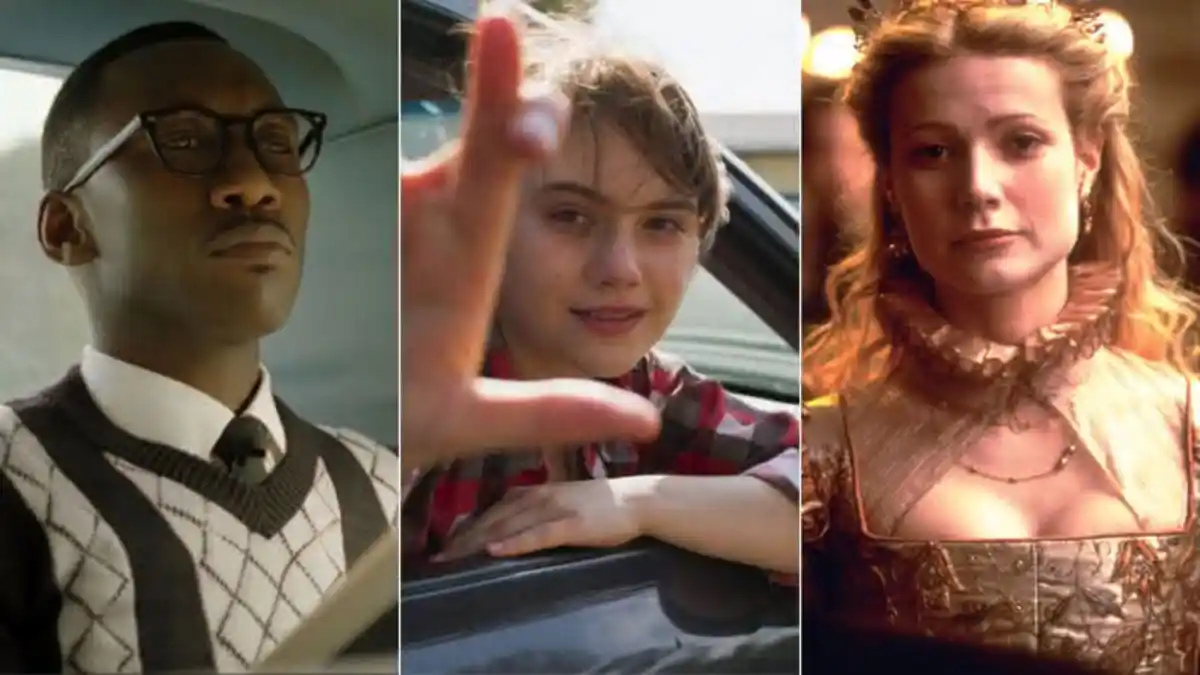
This article aims to explore the controversial films Oscar nominees, addressing the historical context, controversies and impact on the film industry, as well as analyzing artistic and narrative aspects in depth.
This analysis examines how bold works break conventions and generate intense debate, reflecting profound cultural and social changes, detailing criticism, innovative techniques and bold narratives to offer a comprehensive overview.
Discover the behind-the-scenes of these iconic productions and understand how challenges and innovations shaped the history of cinema. Continue reading to delve deeper into unmissable analyses and curiosities. Explore every detail and be amazed.
Content Index
History of Controversial Oscar Nominated Films
The trajectory of the controversial films at the Oscars reflects the evolution of cultural barriers and aesthetic standards in society.
From the beginnings of the seventh art to the present day, many works that challenged common sense have earned space in the nominations, even if surrounded by controversy.
These productions not only broke taboos, but also paved the way for discussions about artistic freedom and representation. Over the decades, cinema has become a vehicle for social, political and cultural criticism.
Read too:
- The Substance Movie Explained: Understand the Message of the Horror Film
- Arcane Season 2: Understand the Story and Ending Explained
- Transformers One: Set 3 Billion Years Before the Other Films!
Several films addressed themes considered radical or inappropriate for the time, generating intense debates among critics, the public and authorities.
This environment of tension and rupture led to the emergence of works that, despite the controversies, were recognized for their relevance and artistic quality.
The Oscar recognition of films that generated intense debates highlighted the courage of filmmakers in addressing sensitive subjects.
These nominations served as a milestone in the history of cinema, demonstrating that controversy can be a sign of innovation and thematic depth.
Including the term x appears as an example of how bold ideas can be synthesized in a single expression that generates multiple reflections.
Examples of Controversial Oscar Nominated Films
This section will present some of the most controversial films nominated for an Oscar, works that challenged conventions and provoked intense debates by addressing controversial topics.
Each film, in its own way, showcases the boldness of its creators and reflects significant cultural and social transformations in the world of cinema. Continue reading to discover how these provocative milestones contributed to the evolution of the seventh art.
The Last Tango in Paris
One of the films that caused a great stir was The Last Tango in Paris. The work, directed by Bernardo Bertolucci, faced enormous resistance due to its explicit scenes and its approach to taboo subjects for the time.
Despite the controversies, the Oscar nomination reinforced the artistic value and the ability to provoke important discussions about sexuality and freedom. The international repercussion of The Last Tango in Paris showed how cinema can challenge social norms.
Critics and viewers were divided between admiration for the film's boldness and criticism of the way certain themes were treated. The film remains a striking example of how the barriers of morality can be crossed in the name of artistic expression.
The Last Temptation of Christ
Another production that shocked the public was The Last Temptation of Christ, directed by Martin Scorsese. The film presented a reinterpretation of the life of Jesus Christ, which caused outrage in religious and conservative sectors.
The Oscar nomination highlighted Scorsese's courage in addressing such a sensitive topic, even in the face of intense criticism and protests. The work raised debates about freedom of interpretation and the importance of cultural context in the reception of a work of art.
While some saw the film as an innovation that questioned established dogma, others considered it an affront to religious tradition. This dichotomy illustrates well how controversial films can simultaneously challenge and enrich the cultural landscape.
A Clockwork Orange
A Clockwork Orange, by Stanley Kubrick, is another emblematic example of how controversy can be linked to cinematic innovation. The adaptation of Anthony Burgess's novel led to intense debates about violence, social control and individual freedom.
Despite its scenes of extreme brutality, the film was recognized for its technical and narrative excellence, which culminated in Oscar nominations. Kubrick's dystopian approach confronted the viewer with a disturbing vision of society.
Critics have highlighted the film's importance as a warning about the dangers of authoritarianism and dehumanization. This balance between technique and controversial content ensured that A Clockwork Orange remained in the collective memory as a landmark of cinematography.
Other Controversial Productions
Several other films also made the list of controversial nominees. Among them, productions that addressed themes such as sexuality, violence, racial issues and profound social criticism stand out.
Each work brought to light discussions that went beyond the limits of convention, demonstrating cinema's ability to provoke intense reflections.
Some recent productions also made it onto this list, showing that controversy continues to be a present element in the seventh art.
Films that challenge aesthetic and narrative conventions have been gaining more and more space, reflecting the transformations of contemporary society.
These cases demonstrate that Oscar recognition can be both a celebration of innovation and an invitation to debate.
Impact of Controversial Films on the Film Industry
The indication of controversial films to the Oscars had a profound impact on the film industry. These works often paved the way for new approaches and styles, encouraging filmmakers to explore themes that stray from the conventional.
By being recognized by such a prestigious award, these films demonstrate that boldness can be a valuable differentiator. The repercussions of these controversies transcend the world of films, influencing cultural and social debates.
Filmmakers have had more freedom to experiment with unconventional narratives and sensitive themes. This has led to a greater diversity of stories and a stronger voice for directors who have dared to innovate.
The Oscars, as an international showcase, helped these films reach a wider audience, transforming controversy into a tool for visibility.
Furthermore, the discussion generated by these works encouraged specialist critics to deepen their analyses of the role of art in society.
In this way, the recognition of controversial films reinforced the idea that innovation and contestation are essential for the advancement of the seventh art.
Critical and Public Reception
The reception of a controversial film can vary significantly between critics and the general public. While some applaud the filmmakers' courage in tackling sensitive topics, others criticize the way these subjects are explored.
This duality often generates heated debates and divisions, both among specialist critics and among viewers.
Critics often emphasize the importance of a bold approach to provoke thought and question established norms. In many cases, controversial films Oscar nominees are seen as masterpieces that anticipated social change.
However, the negative impact can also be observed when the controversy goes beyond the limits of what is acceptable for certain audiences. The public, in turn, tends to react more emotionally to content that touches on personal or cultural issues.
Differences of opinion are common, and the debate extends to social networks, forums and cultural gatherings. This interaction, although polarized, contributes to a healthy and enriching environment for discussion, demonstrating the transformative power of art.
Technical and Artistic Aspects of Controversial Films
You controversial films Oscar nominees stand out not only for their controversial content, but also for their technical and artistic excellence.
Several directors have used innovative resources to tell their stories in a unique way, creating their own aesthetic that reinforces the message of the work.
The combination of photography, soundtrack and art direction helps the controversy to be understood in its artistic context.
From a technical point of view, many of these films present innovations that open up new possibilities for cinematic narrative.
The use of techniques such as subjective camera, non-linear editing and special effects contribute to the message being transmitted in an impactful way.
These technical innovations, combined with a challenging script, result in works that remain relevant even years after their release. Artistically, the freedom of expression demonstrated by filmmakers influences future generations.
You controversial films serve as a warning that cinema can be a powerful tool for social criticism and cultural transformation.
This mix of technique and provocative content creates a legacy that goes beyond awards and is consolidated in the collective memory.
Curiosities and Behind the Scenes
The trajectory of the controversial films is full of curious stories and surprising behind-the-scenes details. Many directors have faced censorship, lawsuits and even threats due to the content of their works.
These challenges reinforce the courage needed to produce content that defies social conventions. In several cases, scenes that caused controversy were edited or even eliminated in international versions.
Some films have had to deal with cuts imposed by censorship bodies, which often changed the reception of audiences and critics. These behind-the-scenes stories enrich the narrative, showing that the path to innovation is not always easy.
Interestingly, the Oscar nomination itself often serves as a testament to the courage of filmmakers. Despite the risks, these professionals chose to follow their artistic vision, even in the face of external challenges.
This persistence inspired other creators to explore risky themes, contributing to the continuous evolution of cinema. Furthermore, historical records indicate that some controversial films have become a reference in academic studies on communication and culture.
Researchers analyze audience reactions and the debates generated to understand the social transformations that have occurred over the decades. These studies reinforce the importance of recognizing and valuing artistic boldness as a driver of change.
The Future of Controversial Films and Their Oscar Nominations
The current cinematic scenario indicates that controversy will continue to be a present element in Oscar-nominated productions.
With the advancement of technology and globalization, new themes and forms of expression emerge, expanding the limits of what is considered acceptable.
Films that explore contemporary issues such as diversity, inclusion and social crises already demonstrate a tendency to provoke intense debate.
As audiences become more diverse and cultural barriers are blurred, bold productions are expected to gain even more space.
The recognition of these works by major awards reinforces the importance of creative freedom and open dialogue between art and society.
Thus, the future holds not only the continuation of current trends, but also the emergence of new ways of approaching the world through cinema.
Filmmakers from different parts of the world have shown that it is possible to innovate without giving up a deep and provocative narrative.
This evolution points to a future where Oscar nominations will not be limited to conventional works, but will also include those that challenge and inspire.
The legacy of the controversial films serves as an example that, even in the face of controversy, art has the power to transform and provoke significant changes.
Recurring Questions
1. What makes a film considered controversial?
A film is considered controversial when it addresses sensitive or taboo subjects, uses bold narratives and provokes intense debate among both critics and audiences. The way these subjects are treated can generate divergent reactions and, in many cases, cultural clashes.
2. Why do controversial films continue to be nominated for Oscars?
Despite the controversies, these films demonstrate technical and artistic excellence. Oscar recognition is a way to celebrate the innovation and courage of filmmakers in addressing issues that reflect social transformations.
3. What impact did these films have on the film industry?
You controversial films They open up space for new narrative approaches and stimulate cultural debates. They challenge conventional standards and inspire filmmakers to explore themes that promote reflection and change.
4. Is there a standard for what can be considered controversial?
There is no fixed pattern, as what is considered controversial varies according to the cultural and temporal context. What may be shocking in one era may be accepted or even celebrated in another, reflecting the evolution of social values.
5. How does the public react to controversial film nominations?
Audiences often react in a divided manner. While some applaud the boldness and innovation, others may reject the themes addressed. This division, however, is a fundamental part of the debate that these films instigate.
Conclusion
You controversial films Oscar nominees are proof that cinema can be a powerful agent of transformation and reflection.
These works, which challenge the limits of conventional narrative, have contributed to expanding the debate on social, cultural and artistic themes.
By exploring the history, behind-the-scenes and impacts of these productions, the article demonstrates that controversy is not an obstacle, but rather an element that enriches art.
The legacy of these films inspires filmmakers and critics to continue exploring unusual territories and questioning established norms.
Over time, the recognition of controversial works becomes a milestone in evolution, reinforcing the importance of creative freedom.
In short, the universe of controversial films It is a fertile field for innovation, capable of transforming the public's perception and experience.

