

One more step towards science! Because this time it's another discovery involving our solar system and it's about life on Venus. This is all due to researchers having found a chemical compound called phosphine, thus bringing a new path for scientist. Check out the details below and be aware of the most recent discovery in the tech world.
- 5 Fantastic Facts About the Milky Way!
- Most poisonous plants in the world! Check out the TOP 10.
- Free movies on Netflix! Check it out below.
Colorless, toxic and foul-smelling. Phosphine, the substance found by a group of astronomers in the clouds of Venus and which could be an indication of the presence of life. The group believes the discovery is significant, but acknowledges that confirming the presence of "life" on the planet will still require much more work.
"When we got the first hints of phosphine in the spectrum of Venus, it came as a shock," said Jane Greaves, team leader at Cardiff University, in a statement.
What is phosphine? Which indicates possible life on Venus!
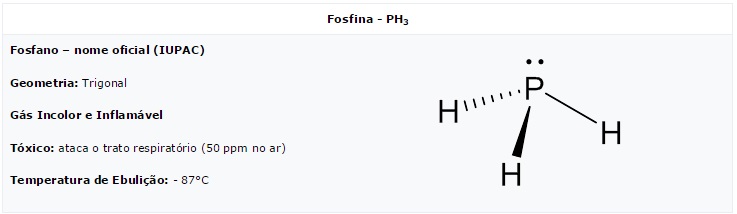
Phosphine (PH3) is a molecule composed of one phosphorus atom and three hydrogen atoms. Being a colorless toxic gas with an odor of garlic or rotten fish, it describes the United States Agency for the Registry of Toxic Substances and Diseases (ATSDR).
It is also extremely flammable and explosive. It can even ignite spontaneously on contact with air. Phosphine is on the US Occupational Safety and Health Administration's (OSHA) List of Hazardous Substances as it is highly toxic to humans.
It acts mainly affecting the cardiovascular and respiratory system. Inhaling this substance can cause nose irritation to lung damage. It can also cause dizziness, nausea and other symptoms.
But what relationship does phosphine have with life?
On our planet, phosphine is associated with life because it is found in the microbes that live in the guts of animals. For example, the substance was found in rocks that had penguin droppings. It is also possible to find the substance in oxygen-poor environments, such as swamps. But, phosphine is more common, however, in pest control and electronics industry.
PH3 fumigation is a common technique used to combat pests in stored seeds and grains. It is also an essential component in semiconductor manufacturing, used as a doping agent — the introduction of impurities into semiconductors to enable conduction.
Well, but what does this have to do with life on Venus? Well, the gas was observed in the mid-latitudes of the planet, at approximately 50 to 60 km altitude. The concentration is small, they form only 10 to 20 parts in every billion atmospheric molecules. But in this context, this is quite significant. So the team of scientists is wondering how phosphine got there if there is no animal excrement, let alone industry to manufacture it.
Along with details about the new phosphine discovery on Venus. Astronomers published in the journal Nature Astronomy several researches they did to try to show that this molecule could have a natural non-biological origin. However, to date, the real reason for the presence of phosphine in the clouds of Venus is still unknown.

